Extraction and drying
Water extraction and drying
Extraction takes standing water out. Drying takes the rest out of the walls, floors and air.
Extraction comes first
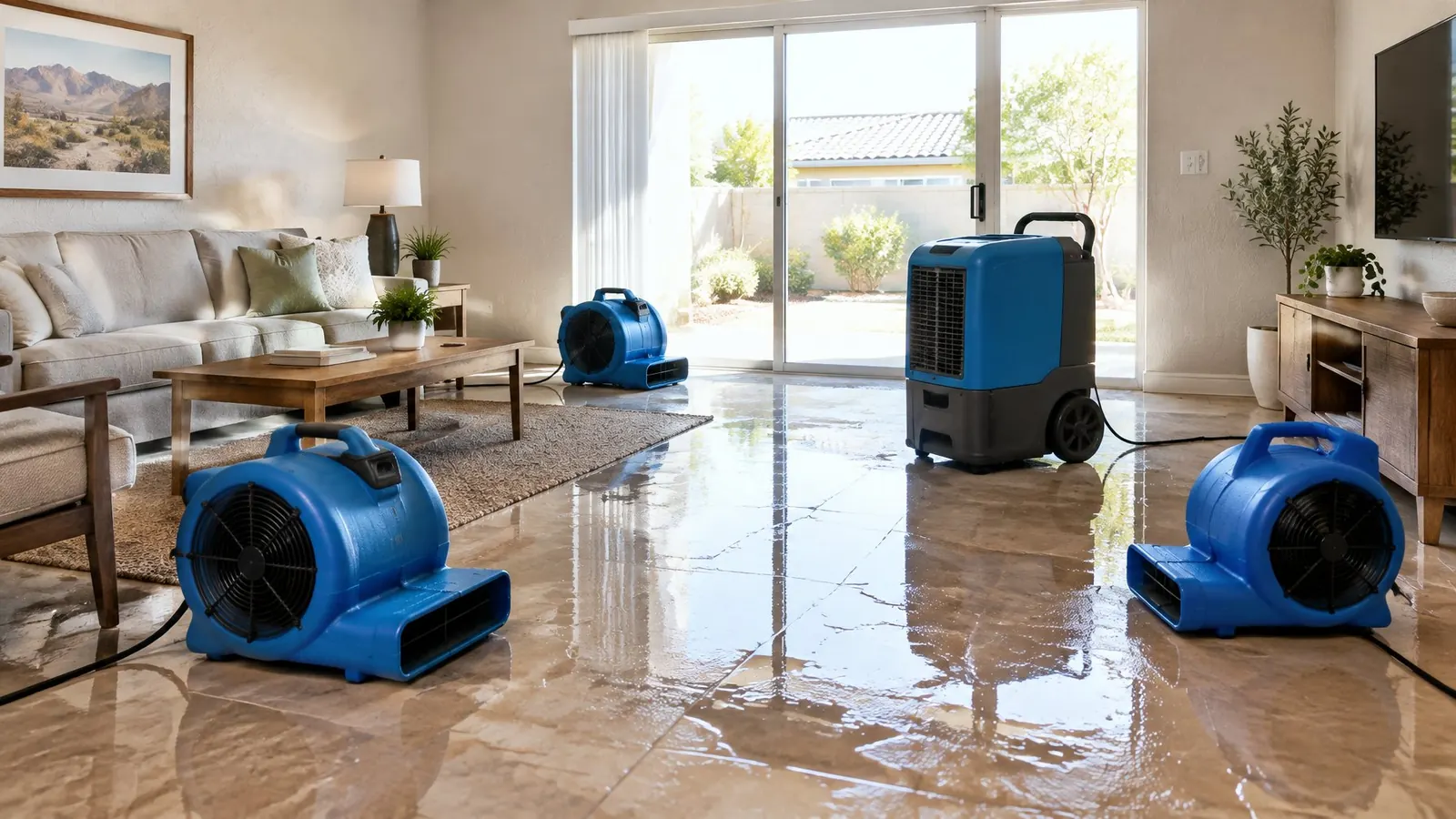
Pumps and wet vacuums pull standing water off hard floors and out of carpet. Removing it early means less of it wicks up into walls.
On a tile or concrete floor, this step can be quick. Over carpet and pad, it is slower and the pad is often discarded.
Drying is measured, not guessed
Air movers push dry air across wet surfaces. A dehumidifier then pulls moisture out of that air so it can pick up more.
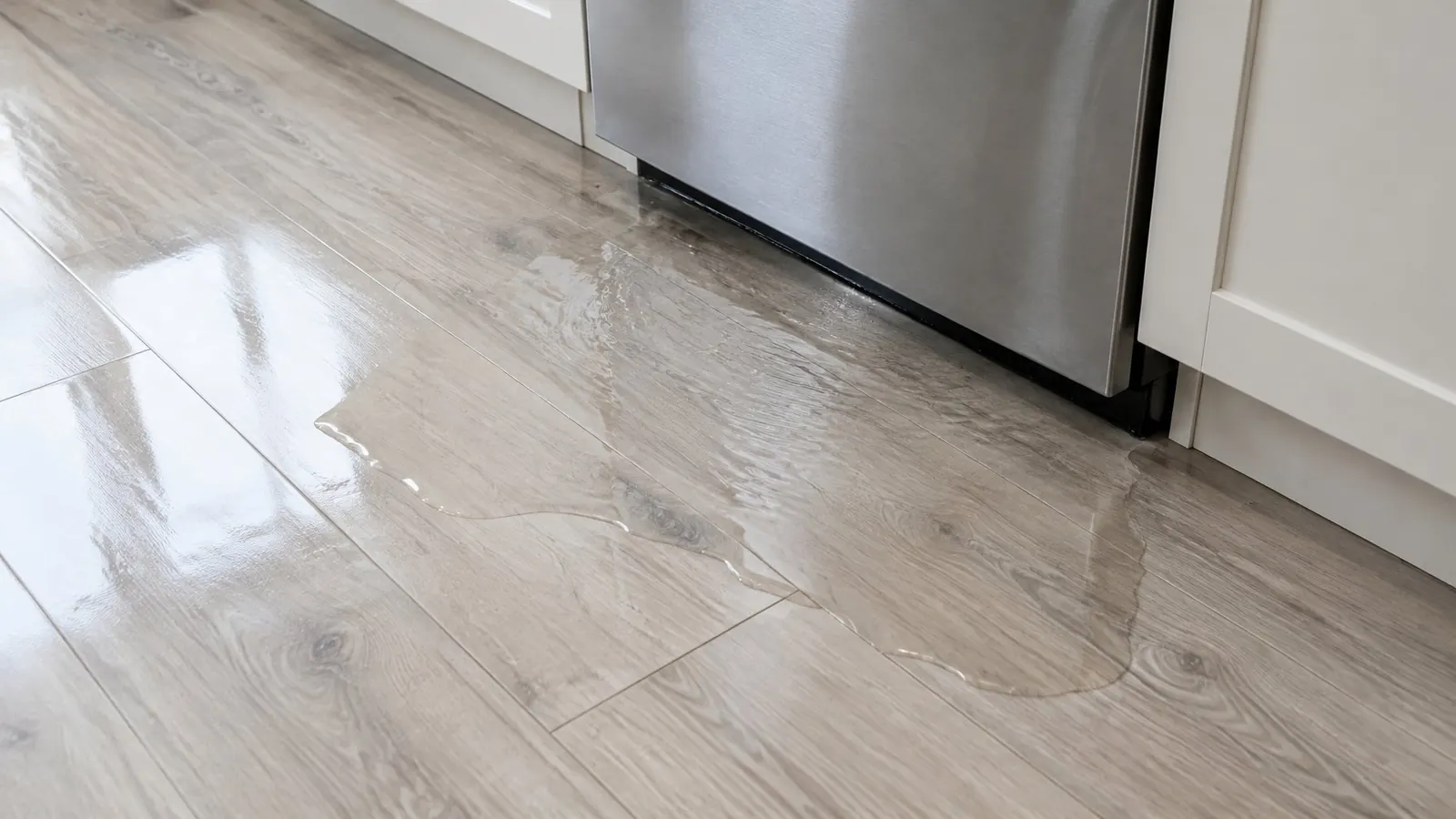
A meter reading on each affected material is logged at every visit. A job is dry when those numbers match readings from an unaffected part of the house.
- Air movers speed evaporation from surfaces
- Dehumidifiers lower humidity so walls keep releasing water
- Meters tell the crew when to stop, not the calendar
What you may notice at home
- Noise
- Equipment runs continuously and is loud. Plan for earplugs or a quieter room.
- Warmth
- Dehumidifiers add heat. Rooms can feel warm even in cool weather.
- Power
- Several machines draw real current. Ask the contractor which circuits it needs.
- Doors and windows
- Often kept closed so humid air stays inside the drying zone.
Why timing matters here
The longer materials stay wet, the more of them end up in a dumpster instead of back on the wall. The California Department of Insurance tells homeowners to stop leaks at the source and dry wet areas with air circulation and dehumidifiers to avoid mold.
That advice is on the department's residential property claims guide.
Water is still moving, or the room is already wet?
Call the number and describe what happened. You are connected with an independent restoration contractor who serves your ZIP. Calling early helps, because wet drywall and flooring get harder to save each day.