Pipes
Burst and leaking pipes
A pipe leak is two jobs: a plumber to fix the line, and a drying contractor for what got wet.
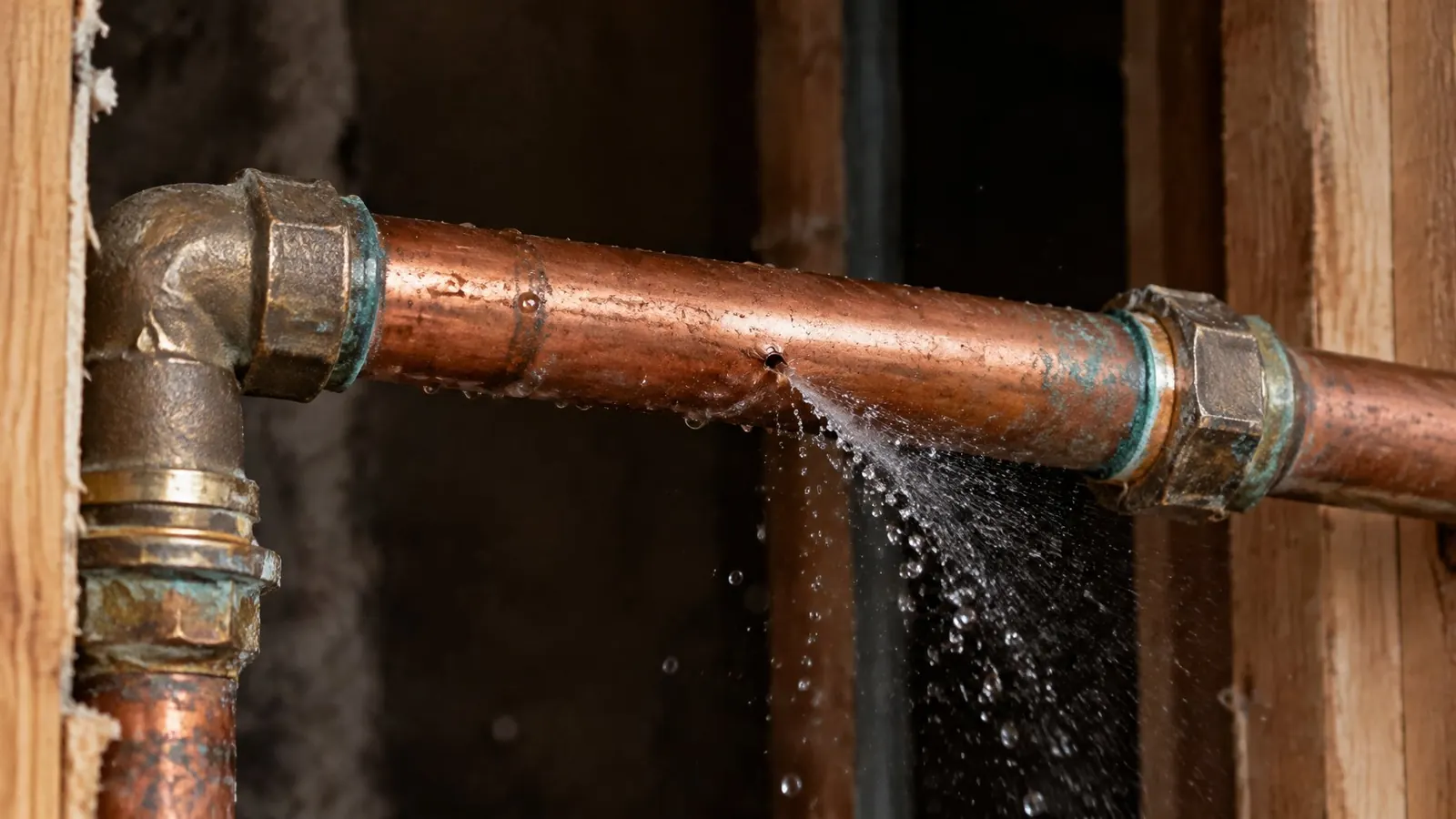
If water is spraying right now
Find the shutoff
Look for the main valve where the line enters the house, or at the meter box near the street.
Close it all the way
Turn it until it stops. Open a low faucet to drain what remains in the pipes.
Cut power if water is near outlets
Only from a dry spot. If you cannot reach the panel dry, stay out and call the electric utility.
Photograph, then call
Take pictures of the pipe and the wet areas before anything is moved.
Pinholes in copper
Small spray leaks sometimes appear in copper lines inside walls. They can run for days behind drywall before a stain shows.
A damp patch, a musty smell or a water bill that climbs without a reason are the usual first signs.
If the house is on a concrete slab
Some homes have supply lines that run under or through the slab. A leak there shows up as a warm spot on the floor, the sound of running water when every tap is off, or damp flooring along one wall.
Finding it takes leak detection equipment. Repair can mean breaking the slab or re-routing the line through the attic or walls. A plumber makes that call. A restoration contractor handles the wet flooring and walls afterward.
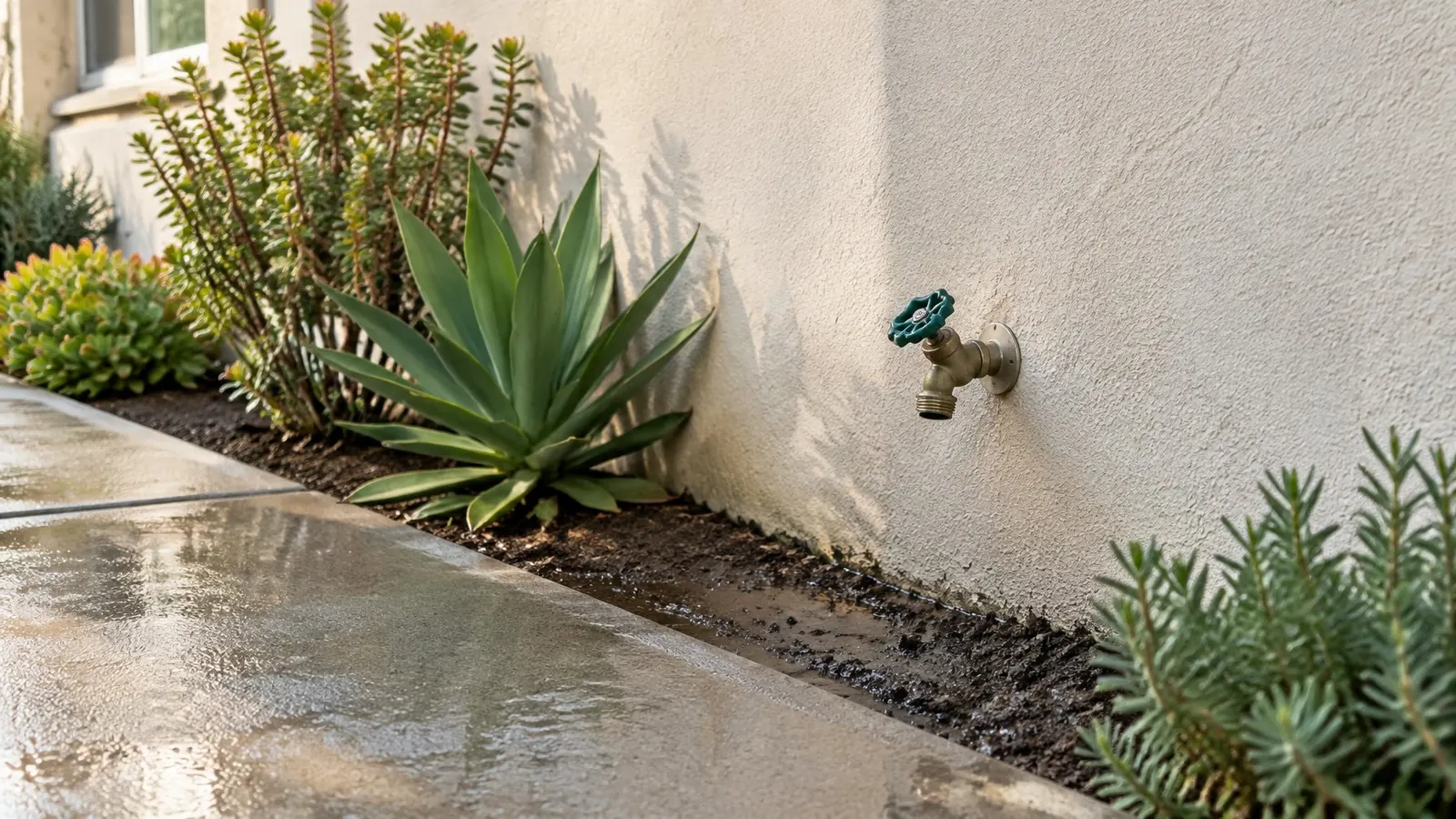
Water is still moving, or the room is already wet?
Call the number and describe what happened. You are connected with an independent restoration contractor who serves your ZIP. Calling early helps, because wet drywall and flooring get harder to save each day.