Appliances
Appliance leaks
Leaks from machines are slow, quiet and common. The cabinet or wall behind them stays wet long after the floor looks dry.
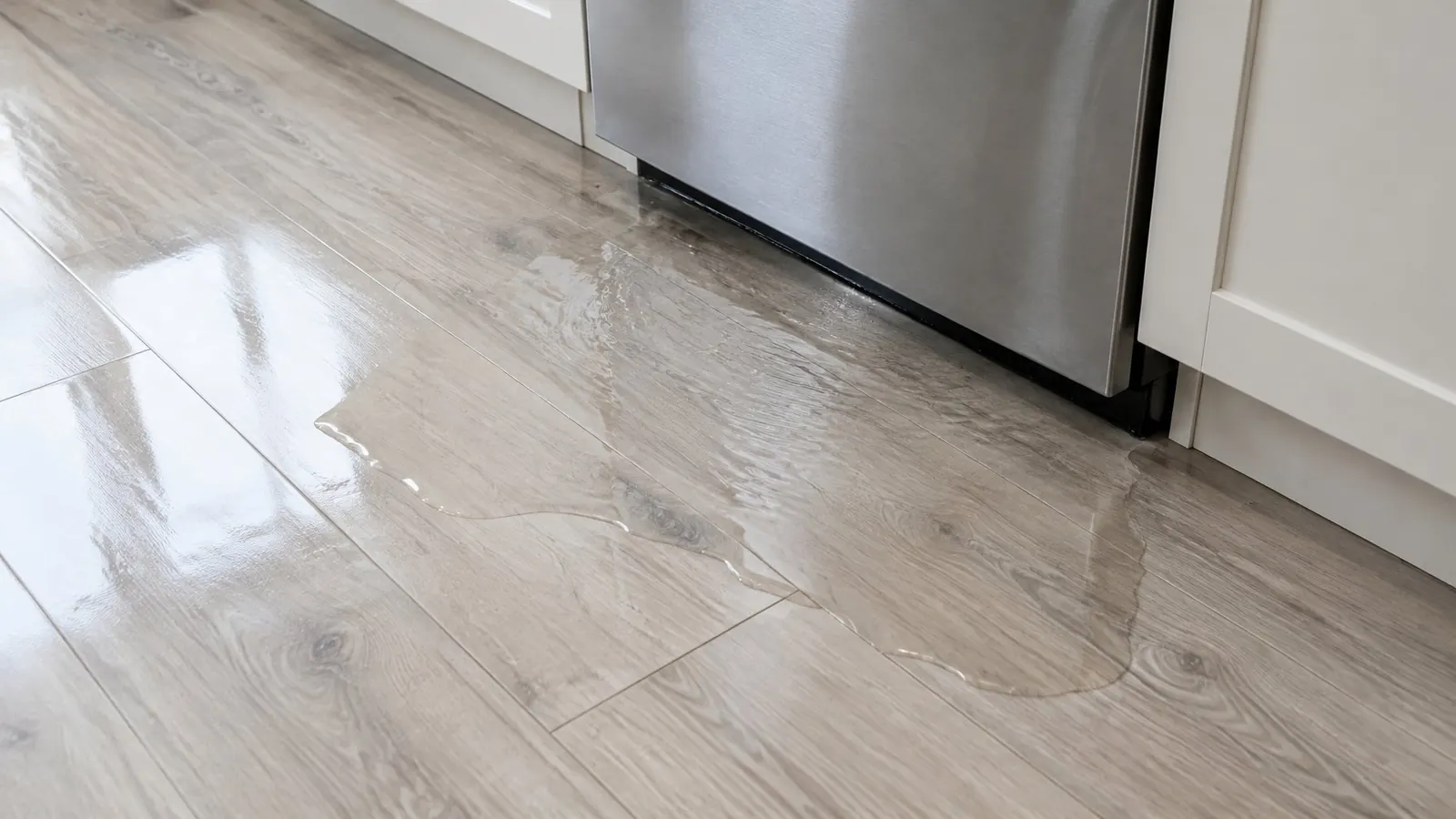
Where appliance water comes from
- Dishwasher
- Door gasket, supply fitting or drain hose. Water collects under the cabinet.
- Washing machine
- Supply hoses and the drain standpipe. A burst hose can run until someone notices.
- Water heater
- Tank corrosion at the base, a relief valve discharge, or a loose fitting at the top.
- Refrigerator
- The ice maker line, often a thin tube behind the unit.
- Air conditioner
- A blocked condensate line dripping into a ceiling or closet.
Shut it off, then look behind it
Most appliances have their own shutoff valve on the wall or under the sink. Turning it is faster than reaching the main.
Pull the appliance away from the wall when it is safe to do so. A meter reading on the back wall tells you whether water went further than the floor.
Why these claims are tricky
Policies often treat sudden water damage differently from damage caused by seepage or repeated leaks over time. A hose that burst last night and a fitting that has dripped for months can be read differently.
Keep the failed part if you can. It shows the insurer what happened.
Water is still moving, or the room is already wet?
Call the number and describe what happened. You are connected with an independent restoration contractor who serves your ZIP. Calling early helps, because wet drywall and flooring get harder to save each day.