Runoff and flooding
Hillside runoff and flooding
Houses on slopes and near creeks take water from the outside. The damage is mostly mud, wet garages and soaked lower floors.
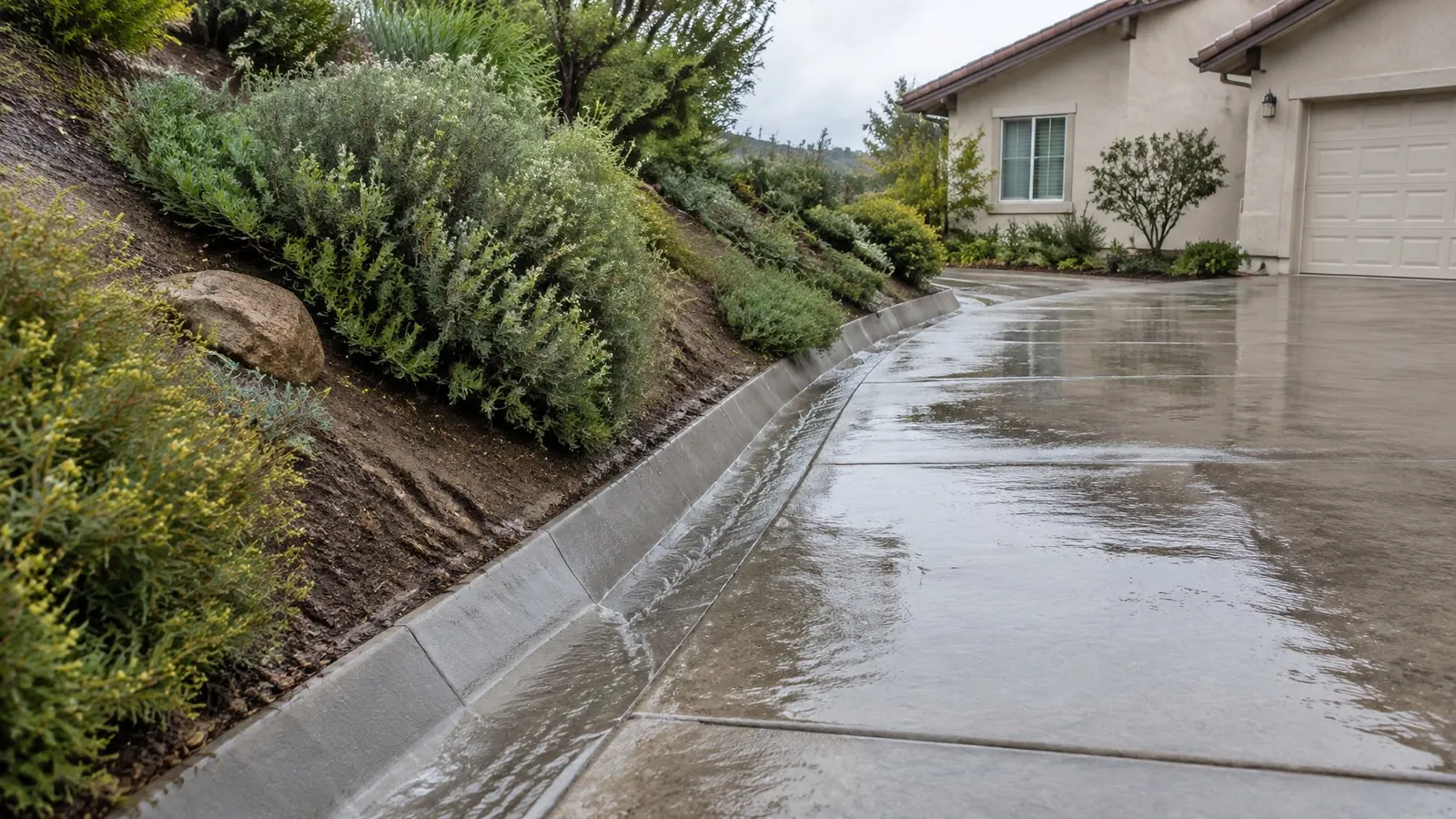
How outside water gets in
The California Department of Public Health lists outdoor surfaces that slope toward a house, sprinklers and downspouts aimed at the wall as common sources of excess moisture. Water also enters through garage doors and low doorways during heavy rain.
Flows from a hillside can carry soil and debris. That changes the cleanup compared with clean water from a pipe.
Flood is a separate insurance question
The California Department of Insurance says homeowners policies do not cover flood damage. Flood coverage is sold as a separate policy.
Rain that enters through a hole a storm made in the roof is treated differently from surface water entering at ground level. Ask your insurer which one applies.
Where to look up your risk
FEMA's Flood Map Service Center shows flood zones by address. Look up your parcel there before storm season.
The county's hazard mitigation annex for San Marcos covers local flood risk in more detail. FEMA's map is at msc.fema.gov.
During and right after a storm
Stay out of moving water
Do not wade or drive through flooded streets or driveways.
Clear your own drains
Leaves and trash on a storm drain near your property can cause local ponding.
Document the high-water line
Photograph the mark on walls and garage doors before cleanup.
Call once it is safe
Describe how deep the water got and whether it carried mud.
Water is still moving, or the room is already wet?
Call the number and describe what happened. You are connected with an independent restoration contractor who serves your ZIP. Calling early helps, because wet drywall and flooring get harder to save each day.